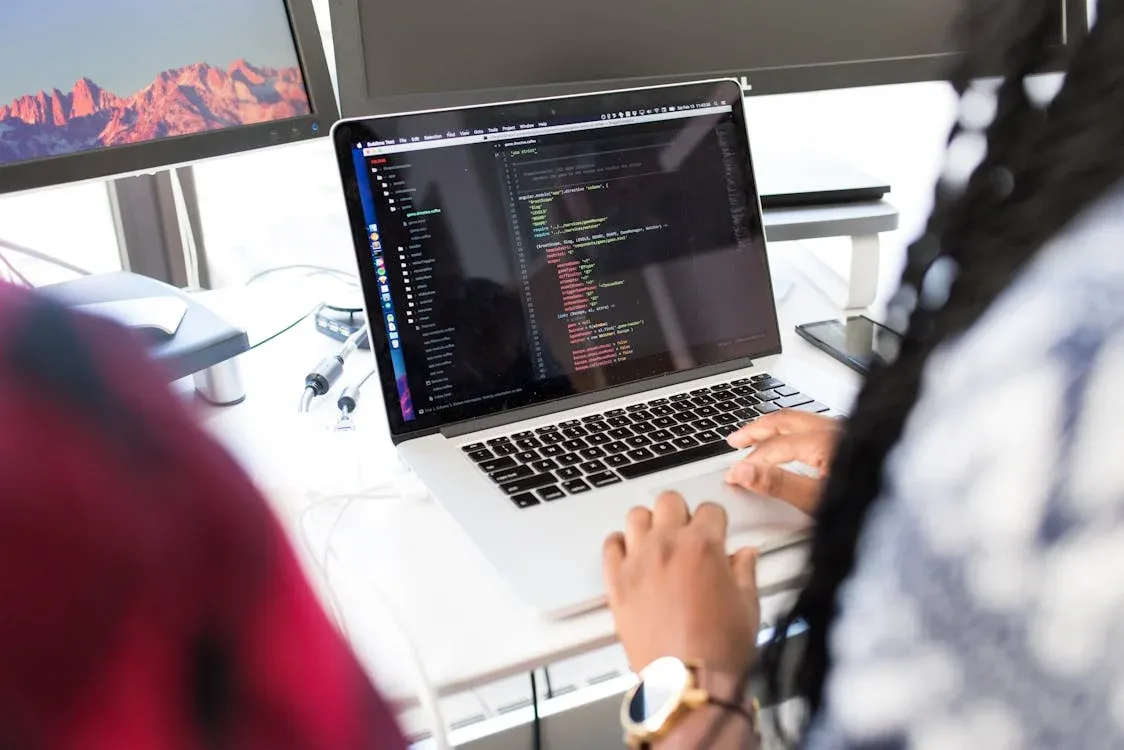
Bridging Design and Development: Why Collaboration Builds Better Products
In today’s digital landscape, design and development are deeply connected.
When these two disciplines work in harmony, the result is more than a good-looking interface — it’s a product that feels right and performs flawlessly.
At Wedux, we’ve learned that true success comes from breaking down the traditional barriers between designers and developers. Let’s explore how tighter collaboration shapes better digital products.
1. Shared Understanding Leads to Stronger Foundations
Designers think in user flows and emotion. Developers think in logic and efficiency.
When both perspectives align early, ideas become feasible faster, and fewer compromises are made later.
That’s why we start every project with joint planning sessions.
By mapping user journeys, data structures, and technical constraints together, we ensure everyone builds from the same foundation.
“Good collaboration prevents design debt and tech debt before they even start.”
2. Collaboration Improves Handoff — and Results
The dreaded “handoff” is often where great ideas lose momentum.
To avoid that, we create a shared design system that acts as a single source of truth.
Design tokens (colors, spacing, typography) automatically sync with our component library in code.
Developers don’t just receive static screens — they receive living documentation.
This alignment shortens feedback loops, improves consistency, and keeps design intent intact through every commit.
3. Faster Feedback, Fewer Revisions
In traditional workflows, feedback moves slowly between teams.
By integrating designers into dev sprints, we make improvements in real time.
- Designers preview staging builds and comment directly in context.
- Developers flag UI concerns before they become blockers.
- Everyone sees progress transparently through shared project boards.
The outcome? Fewer rounds of revisions and a smoother path to launch.
4. Code-Informed Design = Realistic Creativity
When designers understand the development stack — whether it’s Nuxt.js, Tailwind CSS, or Vue components — their creativity becomes more impactful.
They know what’s possible, what’s performant, and where micro-interactions can elevate user experience without sacrificing speed.
Likewise, when developers value design principles like hierarchy and rhythm, they code interfaces that feel as good as they function.
5. Collaboration Builds Culture, Not Just Products
Cross-disciplinary teams naturally develop empathy.
Designers learn to appreciate the complexity of engineering; developers gain a deeper respect for user psychology and storytelling.
This mutual understanding fosters:
- More confident decision-making
- Higher morale
- A shared sense of ownership
It’s the difference between delivering a project and crafting an experience.
Here's what we've learned after years of building digital products: the best work happens in the overlap.
When designers understand code, and developers understand people, you stop getting compromises and start getting solutions. The handoff friction fades away, replaced by genuine creative partnership.
We've seen teams go from frustrating misalignment to creative flow just by breaking down those invisible walls between design and development. Suddenly, impossible ideas become achievable. Good designs become great products.
Sound familiar? If your team feels stuck in the old way of working—designers throwing designs "over the wall" and developers scrambling to interpret—we'd love to show you how a more integrated approach feels. Let's turn your team's collaboration into your competitive advantage.
Why Every Company Needs a Strong, Modern Website
In today’s digital landscape, a company’s website is more than an online presence — it’s a core business tool that drives credibility, sales, and long-term growth.
WordPress Theme vs. Custom Development: Which one is right for your business?
An in-depth comparison of WordPress themes and custom development, helping you make the right choice for your business needs, budget, and long-term goals.